International Scientific Conference “Project Pedagogy in the Service of Sustainability” Concluded Successfully at the Rejtő Faculty
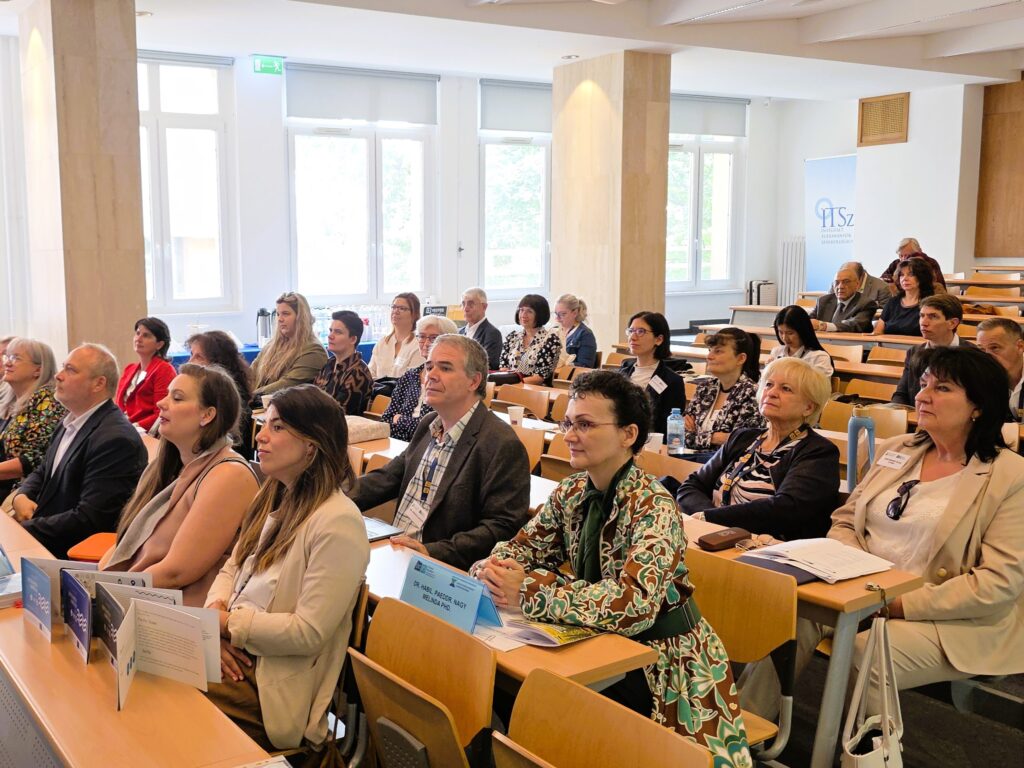
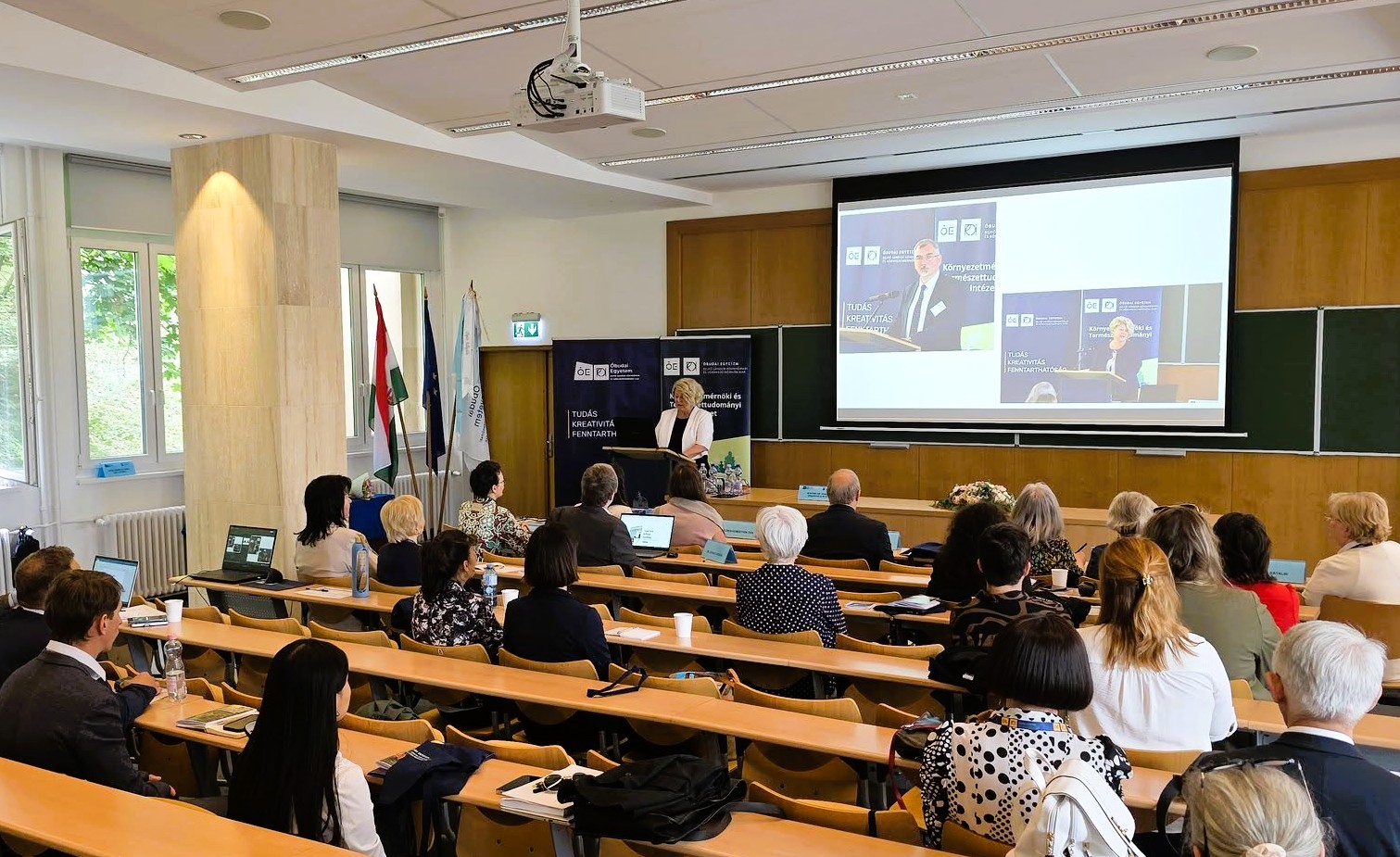
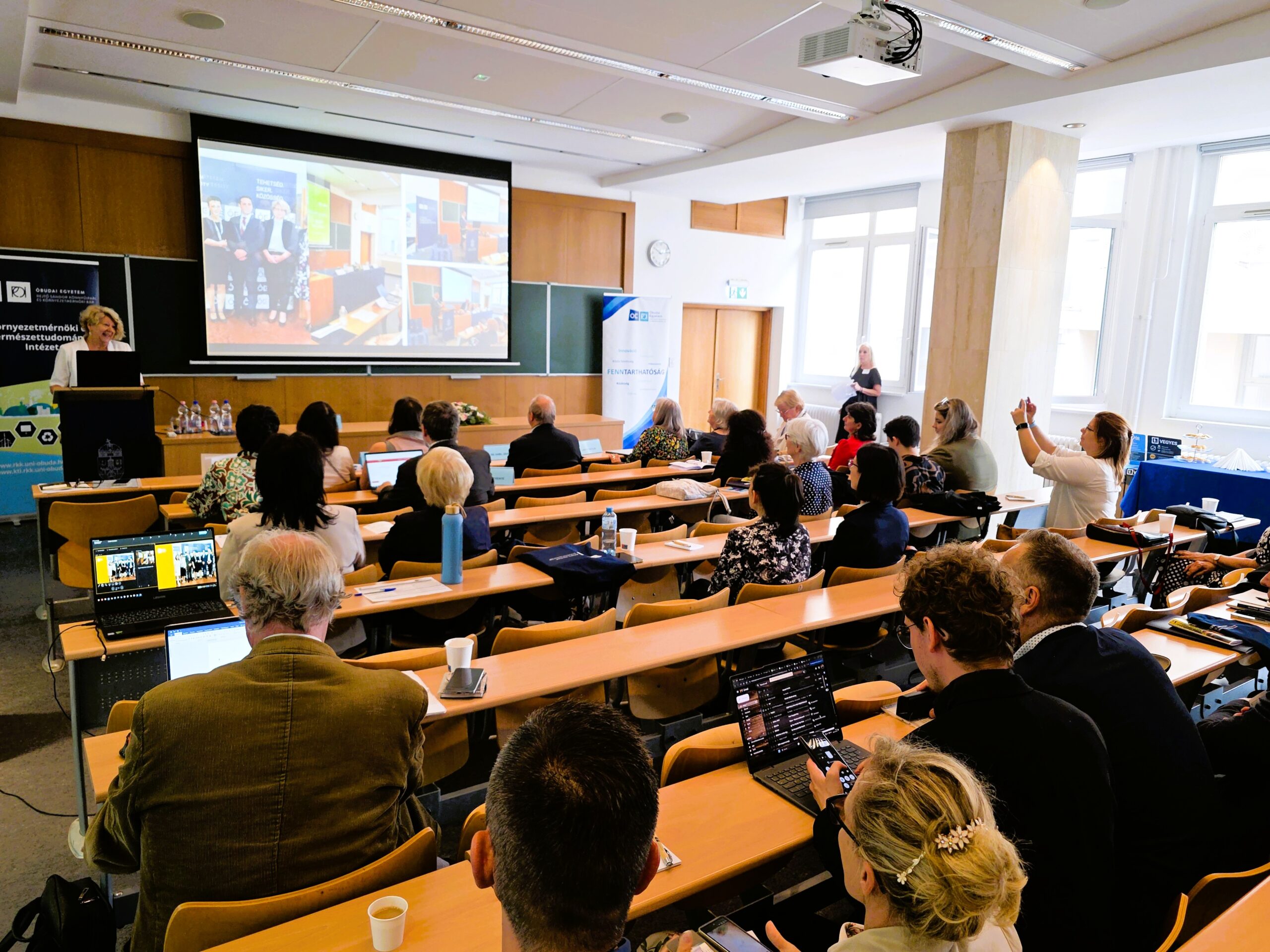
The International Scientific Conference titled “Project Pedagogy in the Service of Sustainability – Learnable Sustainability from Kindergarten to University, Within and Beyond Borders” was held with great success and a remarkably rich professional program on June 4, 2026. Organized by the Rejtő Faculty of Obuda University, the event was hosted in the Schmalz Hall, which was filled to capacity with domestic and international experts dedicated to sustainability and modern pedagogy.
The prominent professional sponsor of the conference was the Project Pedagogy Department of the Hungarian Pedagogical Society, and the implementation of the program was also supported by the Foundation for Obuda University.
The central focus of the conference was educational continuity. Participants agreed that developing an environmentally conscious attitude begins with kindergarten play, deepens through school projects, and reaches fulfillment in university research. The event successfully broke down the walls between different levels of education, providing a platform for exchanging best practices from early childhood education all the way to higher education.
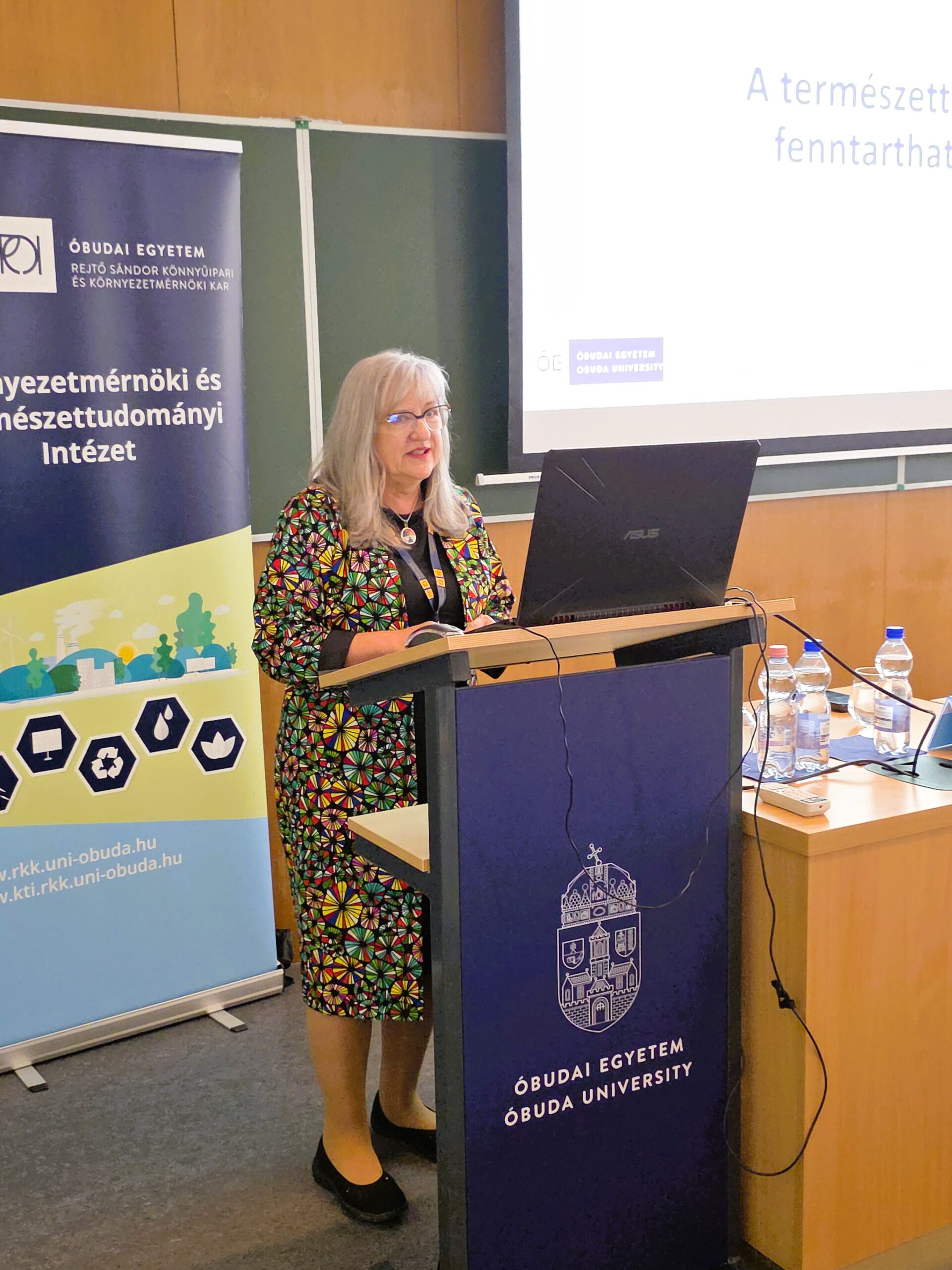
The conference was opened by Bodáné Dr. habil. Rita Kendrovics, Vice-Dean, Institute Director, and Chair of the Organizing Committee, who also delivered the written welcoming address of Dr. habil. László Koltai, Dean of the Rejtő Sándor Faculty of Light Industry and Environmental Engineering at Obuda University. The welcoming speeches emphasized that the global environmental challenges of the 21st century demand not only technological solutions but also a fundamental shift in perspective from every member of society. Launched ten years ago, the goal of this conference series remains unchanged: to reaffirm that sustainability is not merely a chapter to be fitted into a curriculum, but a living competence for which traditional educational frameworks are no longer sufficient. The action-oriented methodology of project pedagogy enables students to understand complex ecological interrelations and engage in real-world problem-solving.
During the morning plenary session, renowned experts explored the multifaceted nature of sustainability:
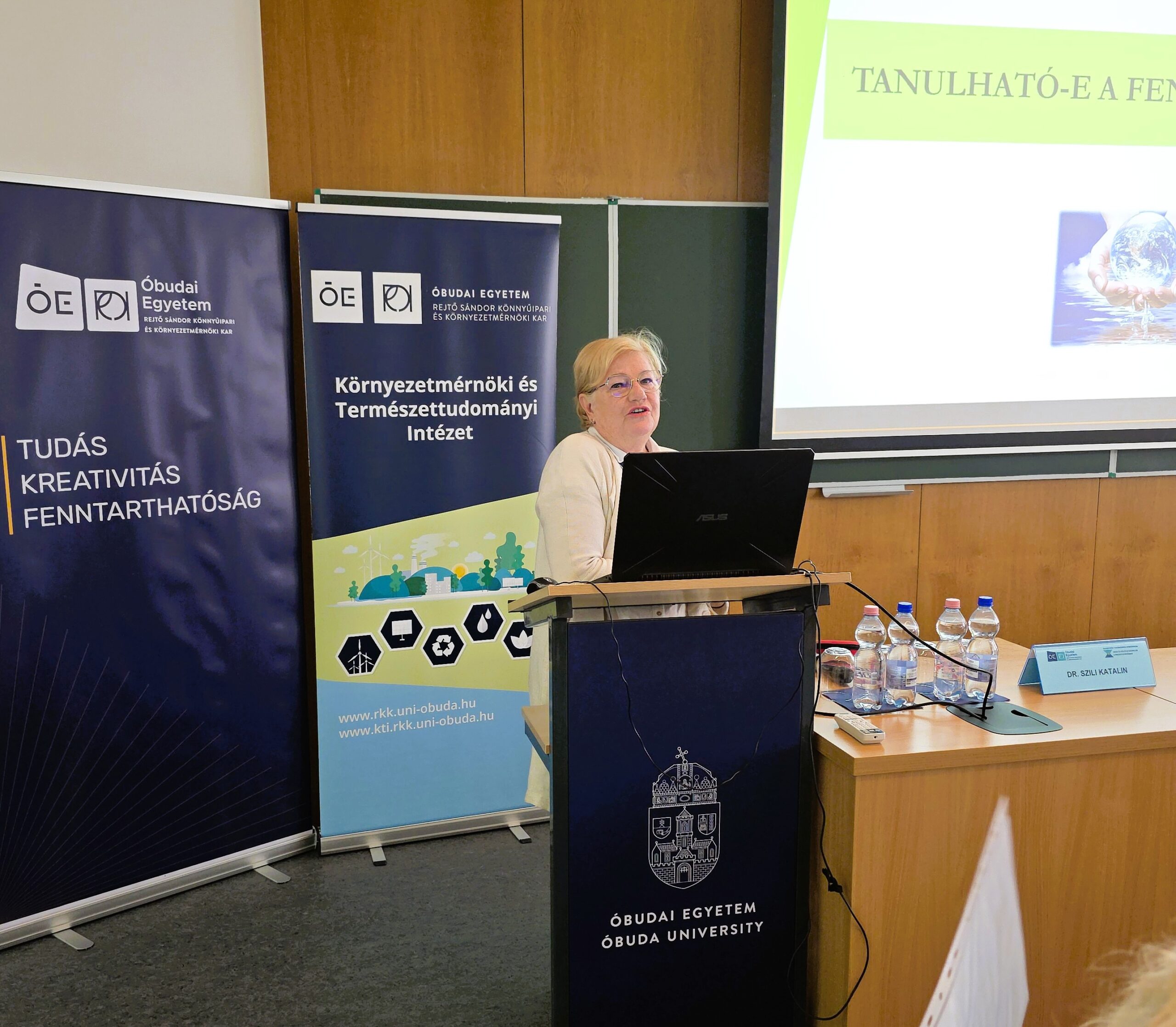
Dr. Katalin Szili (Former Speaker of the National Assembly, Founder and Honorary Chair of the National Council for Sustainable Development) delivered a presentation titled “Can Sustainability Be Learned?”, pointing out the vital importance of systemic and societal learning processes.
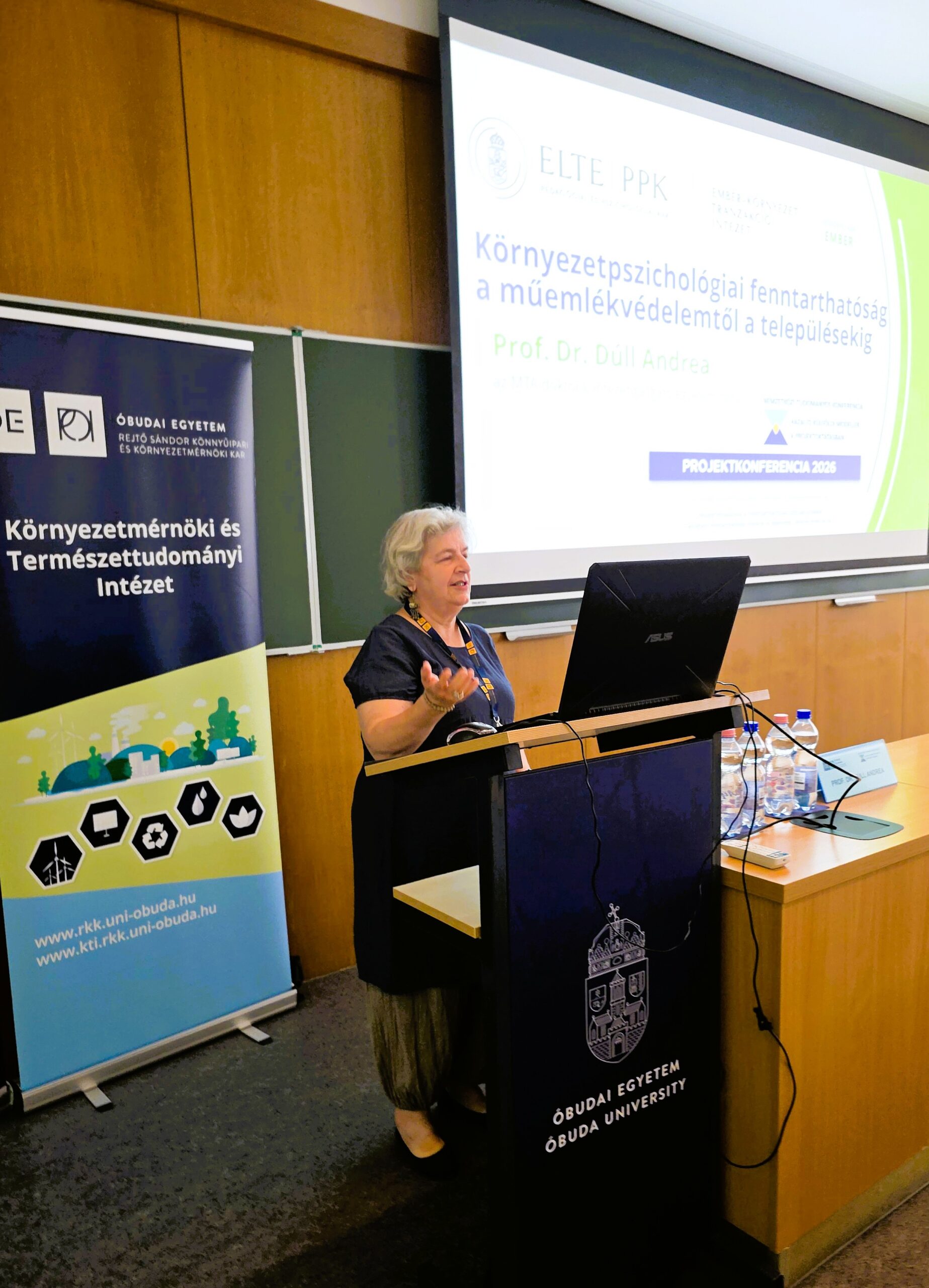
Following her, Prof. Dr. Andrea Dúll (University Professor, Chair of the HAS Psychological Scientific Committee, Dean of the ELTE Faculty of Education and Psychology, Director of the Institute of People-Environment Transaction) gave a captivating lecture on “Environmental Psychological Sustainability from Monument Protection to Settlements”, highlighting the relationship between the physical environment and human psyche.
Continuing the plenary lectures, Katalin Czippán (Educational and Strategic Consultant, Founding Co-Chair of the Blue Planet Foundation, Nature Education for Sustainability, IUCN CEC) focused on nature-based solutions and experiential learning pedagogy in her presentation, “Learning from Nature for a More Sustainable Future”.
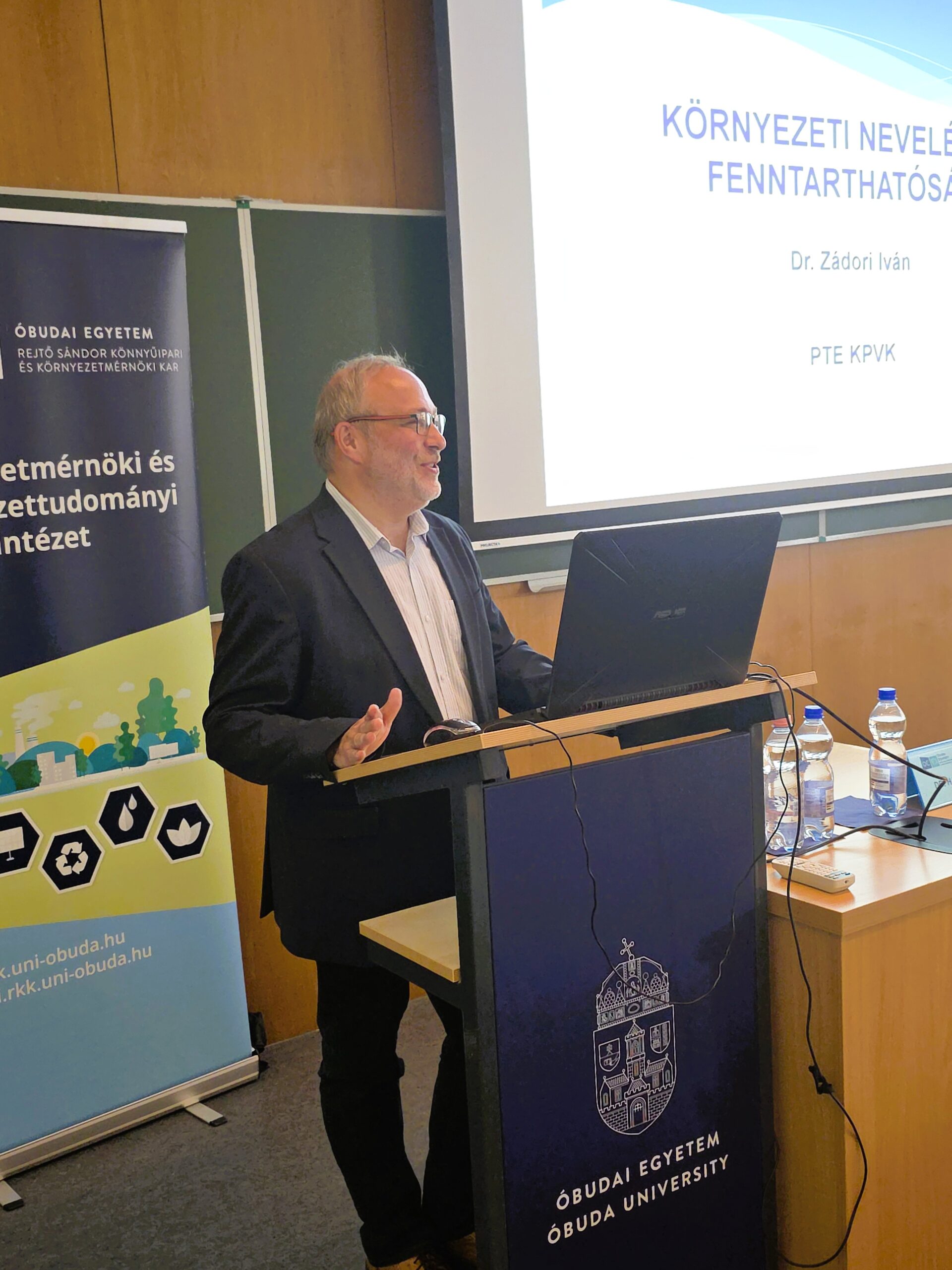
As part of the morning program, Dr. habil. Iván Zádori (Vice-Dean for Relations, Associate Professor at the University of Pécs, Faculty of Cultural Sciences, Education and Regional Development) introduced his new textbook titled “Environmental Education and Sustainability”. The official book presentation and signing session took place during the coffee break in the university lobby.
Following the refreshing break, the professional program continued at an international level:
Dr. habil. PaedDr. Melinda Nagy, PhD. (Vice-Rector of J. Selye University, Slovakia) shared valuable experiences on outdoor, practical education in her lecture, “The Pedagogical Power of Field Learning”.
Then, Zita Szőllősi-Sebestyén (Environmental Education Coordinator at the Association of Environmental Service Providers and Manufacturers) introduced practical techniques for raising awareness and sparking motivation with her presentation, “From Experience to Attitude – ‘Aha’ Moments in Sustainability Education”.
Following a networking lunch, the program continued from 14:00 with section presentations and workshop discussions. In these smaller, interactive groups, participants debated best practices, showcased their own educational project designs, and built valuable professional connections.
The primary objective of the conference was to ensure that participants left not only with theoretical knowledge but also with immediately applicable, practical project ideas. Throughout the presentations, experts collaboratively explored how a kindergarten vegetable garden, a high school waste management project, or a university innovation workshop can become the driving engine of a sustainable future.
In their closing remarks, the organizers reaffirmed the shared pedagogical creed: the future must not only be taught, but built together.
The detailed materials and presentation abstracts of the conference are continuously updated on the official website: projektkonferencia.rkk.uni-obuda.hu